
Did you know that up to 25% of your home’s heat can be lost through an uninsulated loft? That’s right — a poorly insulated roof is like leaving a window open all winter!
Fortunately, installing loft insulation is one of the most effective and affordable ways to cut your energy bills, make your home more comfortable, and reduce your carbon footprint.
In this post, we’ll explore how loft insulation works, what it costs, the savings you can expect, and some key things to keep in mind before you start.
The Benefits of Loft Insulation
Loft insulation acts as a thermal barrier, slowing down the rate at which heat escapes from your home through the roof. In winter, it keeps warm air in; in summer, it helps keep your home cooler.
The results are immediate and long-lasting:
- Lower energy bills: You’ll use less heating and cooling energy throughout the year.
- Reduced carbon emissions: Insulating your loft is one of the simplest ways to make your home more eco-friendly.
- Increased comfort: Rooms stay warmer in winter and cooler in summer.
- Improved property value: Buyers increasingly look for energy-efficient homes.
How much can you Save?
Even modest insulation improvements can make a noticeable difference. For example, increasing existing loft insulation from 120mm to 270mm (the current recommended standard) typically costs around £750 to install. That upgrade could save you around £20 per year on heating costs and reduce your carbon emissions by roughly 55kg of CO₂ annually.
If your loft currently has no insulation, the savings are even more significant. Installing 270mm of insulation to meet new-build standards might cost about £900, but it could save you up to £230 per year in heating bills. That’s equivalent to cutting around 600kg of CO₂ emissions each year — a substantial improvement for a relatively small investment.
Over time, the savings add up, meaning the insulation effectively pays for itself — and then keeps saving you money year after year.
Types of Loft Insulation
There are two main materials commonly used for loft insulation today:
- Mineral Wool (Volcanic Rock): Durable and fire-resistant, mineral wool offers excellent thermal and acoustic insulation. It’s also water-repellent, making it suitable for slightly damp spaces.
- Fibreglass (Made from Recycled Glass): A popular and affordable option, fibreglass insulation is lightweight, easy to handle, and eco-friendly thanks to its recycled content.
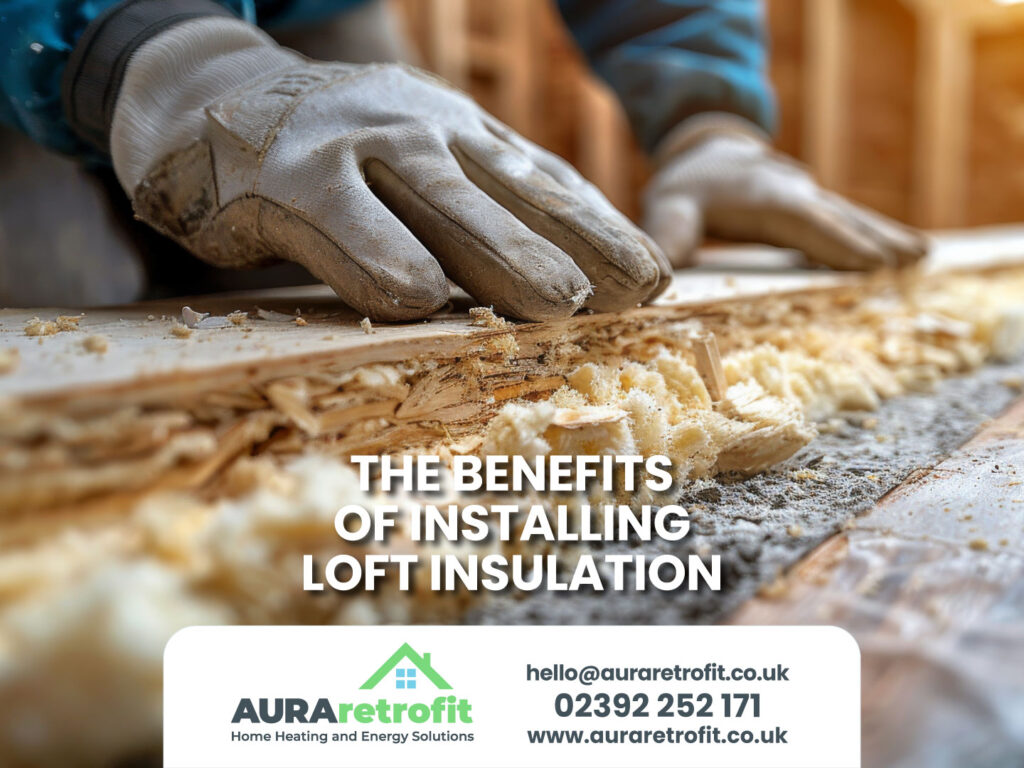
Both materials are classified as “irritants”, meaning they can cause skin or respiratory irritation if handled without protection. Always wear the appropriate personal protective equipment (PPE), such as gloves, goggles, and a mask, when installing insulation.
Key things to consider when installing Loft Insulation
Before you start laying rolls of insulation, it’s important to prepare your loft properly to ensure maximum effectiveness and safety. Here are a few essential points to keep in mind:
- Ventilation: Make sure there’s adequate airflow in your loft. Use soffit vents or felt lap vents to prevent condensation and damp problems.
- Downlights: If you have recessed lighting, fit suitable covers to prevent overheating and maintain fire safety.
- Electric cables: Move any cables above the insulation layer to prevent them from overheating.
- Avoid compression: Don’t squash the insulation material. Compressed insulation loses much of its thermal efficiency.
Final thoughts
Upgrading your loft insulation is one of the simplest, most cost-effective home improvements you can make. Whether you’re looking to lower your energy bills, make your home warmer, or do your part for the environment, loft insulation offers a strong return on investment.
If your loft is easy to access and you’re confident with DIY, it’s possible to install the insulation yourself — just remember to take the right safety precautions. Otherwise, a professional installer can complete the job quickly and ensure it meets the latest energy-efficiency standards.
With the potential to save hundreds of pounds and significantly cut your carbon footprint, there’s never been a better time to insulate your loft.