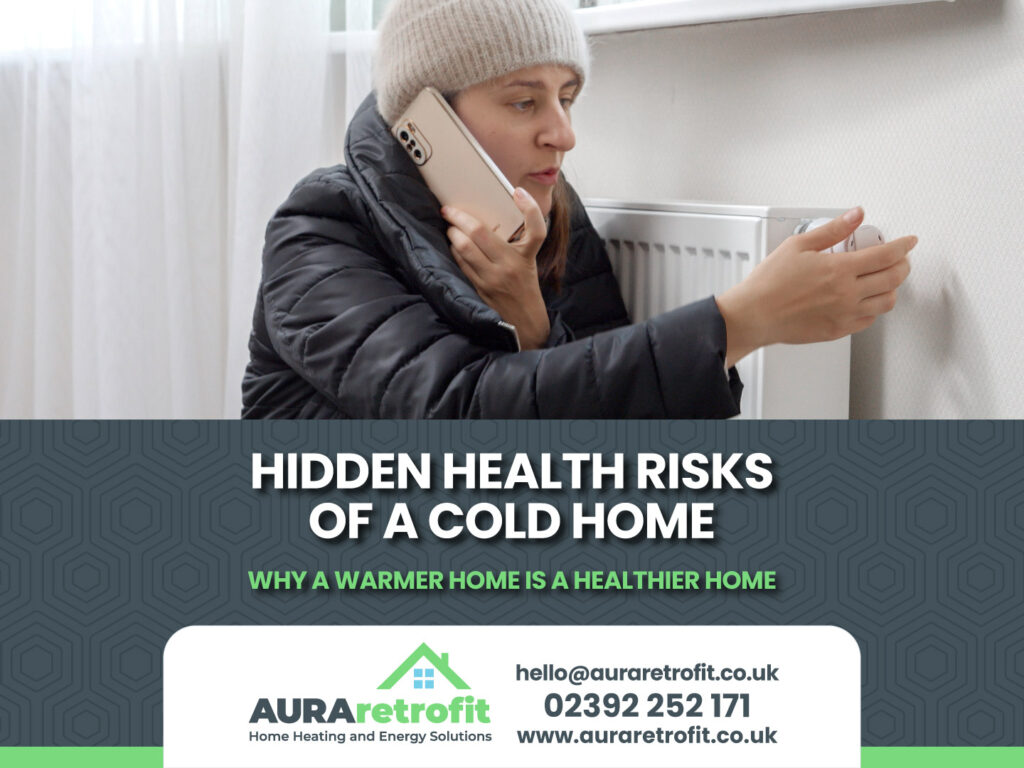
The Hidden Health Risks of Cold Homes: Why a Warmer Home Is a Healthier Home
Keeping your home warm is about far more than feeling comfortable. The temperature inside your property can have a direct impact on your physical health, mental wellbeing and overall quality of life.
For many households across the UK, maintaining a comfortable indoor temperature can be a challenge, particularly during the colder months. Rising energy costs, inefficient heating systems and poorly insulated properties can leave homes feeling cold, damp and difficult to heat.
But the consequences can extend well beyond discomfort.
Living in a home where temperatures regularly fall below 18°C can increase the risk of certain health conditions, especially for older people, young children and those already living with medical conditions.
At Aura Retrofit, we believe everyone deserves a home that is warm, healthy and energy efficient. As an experienced heating and renewable energy specialist, we help homeowners improve their living environments through modern heating technology, insulation and practical energy-saving solutions.
Understanding the health risks associated with cold homes is an important first step towards making positive, lasting improvements.
How Does Living in a Cold Home Affect Your Health?
A cold home can influence our health in ways we might not immediately recognise. While feeling chilly may seem like a minor inconvenience, prolonged exposure to low indoor temperatures can place additional strain on the body and contribute to existing health problems.
According to the NHS’s advice on staying warm and well, keeping your home adequately heated during colder weather can help protect against serious health problems, including heart attacks, strokes, pneumonia and depression. The NHS recommends maintaining a temperature of at least 18°C in regularly used rooms wherever possible, particularly for people with existing health conditions.
Here are some of the most significant risks associated with living in a cold or inadequately heated property.
1. Increased Risk of Heart Problems and High Blood Pressure
When exposed to cold temperatures, the human body naturally attempts to conserve heat by narrowing its blood vessels.
This response can increase blood pressure and force the heart to work harder to circulate blood around the body.
Over time, prolonged exposure to cold conditions can increase the risk of cardiovascular complications, including heart attacks and strokes.
Older adults and people with existing heart or circulatory conditions are particularly vulnerable.
Maintaining a consistently warm indoor environment can help reduce the additional physical strain caused by exposure to the cold.
The UK Health Security Agency explains how cold temperatures affect the body, including changes to blood circulation and increased strain on the cardiovascular system. Prolonged exposure to cold conditions can increase the risk of heart-related complications, particularly for older adults and those with existing medical conditions.
2. Respiratory Problems, Damp and Mould
Cold homes often experience higher levels of condensation, particularly where insulation is inadequate or ventilation is poor.
When moisture collects on cold surfaces, it can create the ideal conditions for damp and mould to develop.
Exposure to mould spores and other indoor irritants can worsen existing respiratory conditions, including asthma and bronchitis, and may contribute to coughing, wheezing and breathing difficulties.
Children can be especially sensitive to poor indoor air quality because their lungs and respiratory systems are still developing.
Damp and mould can also aggravate certain skin conditions, including eczema.
Keeping a property adequately heated, properly ventilated and protected against exces
According to UK Government guidance on the health risks of damp and mould, exposure to damp and mould can contribute to respiratory infections, worsen asthma and bronchitis, and cause irritation to the skin and eyes. Children and people with existing respiratory conditions are particularly vulnerable.sive moisture can help reduce these risks and support a healthier indoor environment.
3. The Effects on Mental Health and Emotional Wellbeing
The impact of a cold home is not limited to physical health.
For many households, the ongoing challenge of keeping warm can become a source of considerable worry.
Concerns about heating bills, uncomfortable living conditions and persistent damp problems can contribute to stress, anxiety and reduced wellbeing.
Some people may even avoid inviting friends or family into their homes because they feel embarrassed by the conditions or cannot afford to heat additional rooms.
Over time, this can contribute to loneliness and social isolation.
Having a warm, comfortable place to live provides more than physical protection. It creates an environment where people can relax, feel secure and enjoy their everyday lives without constantly worrying about the cold.
The UK Government also recognises the mental health effects of poor housing conditions, including anxiety, frustration and social isolation. Living with persistent damp and mould can affect how people feel about their homes and their overall quality of life.
4. Increased Health Risks During Winter
Cold weather places additional pressure on vulnerable people, particularly those living in homes that are difficult or expensive to heat.
Inadequate indoor temperatures can worsen existing medical conditions and increase the likelihood of illness during winter.
Cold housing is also recognised as a contributing factor in winter-related health problems and excess winter deaths across the UK.
Improving the energy efficiency of homes and ensuring residents have access to reliable, affordable heating are therefore important public health priorities.
The National Institute for Health and Care Excellence (NICE), through its guidance on excess winter deaths and illness associated with cold homes, identifies inadequate heating as an important public health concern. NICE recommends identifying vulnerable households and improving access to heating, insulation and energy efficiency support.
What Temperature Should Your Home Be?
Public health guidance in the UK generally recommends maintaining indoor temperatures of at least 18°C during colder weather, particularly for older people, individuals with reduced mobility and those with existing health conditions.
Some people, including young children and those with particular medical needs, may require warmer indoor environments.
The National Institute for Health and Care Excellence (NICE), through its guidance on excess winter deaths and illnesses associated with cold homes (NG6), highlights the importance of identifying households at risk and providing appropriate heating and energy efficiency support.
Maintaining a suitable indoor temperature is not simply about personal preference. It can play an important role in protecting health and reducing the risks associated with prolonged exposure to cold conditions.
The NHS recommends maintaining indoor temperatures of at least 18°C in regularly occupied rooms during colder weather, where possible. This is particularly important for people with existing medical conditions, while some individuals may need warmer temperatures to remain comfortable and healthy.
How Can an Air Source Heat Pump Help Create a Healthier Home?
One of the most effective ways to improve comfort in a cold property is to ensure it has an appropriately designed, reliable and energy-efficient heating system.
For homeowners considering an upgrade, an air source heat pump (ASHP) can offer a modern, low-carbon alternative to traditional gas or oil heating.
Unlike conventional boilers, which burn fuel to generate heat, an air source heat pump extracts naturally occurring warmth from the outside air and transfers it into the home.
Even when outdoor temperatures are low, a correctly designed heat pump can provide dependable heating and hot water.
Beyond its environmental advantages, this technology can contribute to a more comfortable and healthier living environment.
1. Heating Without Burning Fuel in the Home
Traditional gas and oil boilers generate heat through combustion.
Air source heat pumps operate differently, using electricity to move heat rather than producing it by burning fossil fuels.
As a result, they do not produce combustion emissions at the point of use.
Although indoor air quality is influenced by several factors, including cooking, ventilation and household products, removing combustion from the main heating appliance can be a positive step towards a cleaner home heating system.
For homeowners looking to reduce their reliance on fossil fuels, an air source heat pump also provides an opportunity to lower the carbon emissions associated with heating their property.
2. Consistent, Comfortable Temperatures Throughout the Home
One of the key advantages of a well-designed air source heat pump system is its ability to provide steady, controlled heating.
Traditional heating systems are often operated in short bursts, allowing rooms to cool significantly before the heating switches back on.
Heat pumps are generally designed to operate more consistently, maintaining comfortable temperatures over longer periods.
This can help reduce uncomfortable fluctuations between warm and cold conditions, making the home feel more pleasant throughout the day.
For older residents, families with young children and people who are particularly sensitive to temperature changes, this consistency can make a meaningful difference to everyday comfort.
3. Supporting a Drier, More Comfortable Home
Condensation and damp are common problems in properties with poor insulation, inadequate ventilation or inconsistent heating.
When warm, moisture-laden air meets a cold surface, condensation can form, creating conditions in which mould may develop.
Maintaining a more consistent indoor temperature can help reduce the risk of condensation on cold surfaces.
An air source heat pump can contribute to this by providing steady warmth throughout the property.
However, effective damp prevention requires a broader approach.
Adequate ventilation, appropriate insulation and addressing the underlying causes of moisture are equally important.
At Aura Retrofit, we recognise that improving a home’s energy performance involves considering the property as a whole, rather than focusing on the heating system alone.
4. Greater Energy Efficiency and Potential Savings
Heating costs are a major concern for many UK households.
An air source heat pump can be significantly more energy efficient than a traditional combustion-based heating system because it transfers existing heat rather than generating all its heat from fuel.
Under suitable conditions, a heat pump can deliver several units of heat energy for every unit of electricity consumed.
This efficiency can help households manage their energy consumption and, depending on their current heating system, property characteristics and energy tariff, potentially reduce heating costs.
For homeowners currently relying on older or inefficient heating systems, the long-term benefits can be particularly attractive.
And with government financial assistance available for eligible installations, switching to a modern heating system may be more affordable than expected.
Government Grants Can Help Make Your Home Warmer
The cost of upgrading a heating system can be a significant consideration for homeowners.
Fortunately, government initiatives are available to help eligible households improve their energy efficiency and move towards cleaner heating technologies.
The Boiler Upgrade Scheme
The government’s Boiler Upgrade Scheme (BUS) provides financial support towards the installation of eligible low-carbon heating systems in England and Wales.
Eligible homeowners can currently access:
- £7,500 towards an air source heat pump installation under the standard grant.
- £9,000 towards an eligible air-to-water or ground source heat pump installation for qualifying off-gas-grid properties currently heated by oil or liquefied petroleum gas (LPG), following changes introduced in July 2026.
These grants can significantly reduce the upfront investment required to replace an existing heating system.
At Aura Retrofit, we help homeowners understand the available funding and guide eligible customers through the grant application process.
The Warm Homes Plan
For households facing financial challenges or living in properties with poor energy efficiency, additional support may be available through government-backed programmes.
The Warm Homes Plan aims to improve the energy performance of homes, reduce fuel poverty and help more households benefit from cleaner, more affordable heating.
Through programmes such as the Warm Homes: Local Grant, eligible households may be able to access fully funded improvements, including insulation, low-carbon heating and other energy-saving measures.
As an experienced delivery partner for government-funded energy efficiency programmes, Aura Retrofit supports improvements that can make a genuine difference to residents’ comfort, wellbeing and quality of life.
The Health and Comfort Benefits of an Energy-Efficient Home
Improving your home can deliver benefits that extend well beyond the heating system itself.
| Home improvement | Potential benefit |
| Maintaining a comfortable temperature of at least 18°C | Helps protect against health risks associated with prolonged exposure to cold |
| Consistent, reliable heating | Reduces uncomfortable temperature fluctuations and improves everyday comfort |
| Better insulation | Helps retain warmth, reduces heat loss and improves energy efficiency |
| Reduced damp and mould | Limits exposure to allergens and irritants that can worsen respiratory conditions |
| Heating without on-site combustion | Eliminates combustion emissions from the main heating appliance |
| Effective ventilation and moisture management | Supports healthier indoor air and helps prevent condensation |
| Improved heating efficiency | May reduce energy consumption, heating costs and financial pressure |
The greatest benefits often come from combining the right heating technology with appropriate insulation, ventilation and other property improvements.
Why Tackling Cold Homes Is More Important Than Ever
Across the UK, improving the warmth and energy efficiency of homes remains an important priority.
With many households concerned about the cost of energy, inefficient heating systems and poorly insulated properties can place considerable pressure on family finances.
However, the benefits of energy efficiency improvements go much further than saving money.
Warmer homes can help protect vulnerable residents, improve living conditions and reduce some of the health risks associated with cold and damp housing.
Health organisations, including the NHS and NICE, recognise the importance of suitable indoor temperatures in supporting public health.
Meanwhile, government funding programmes and changes to planning regulations are helping make low-carbon heating technologies more accessible.
In England, changes introduced in May 2025 made it easier for many homeowners to install air source heat pumps without applying for planning permission, provided the relevant requirements are met.
Combined with financial incentives such as the Boiler Upgrade Scheme, these developments are helping more households consider the long-term advantages of modern, energy-efficient heating.
How Aura Retrofit Can Help You Achieve a Warmer, Healthier Home
At Aura Retrofit, we understand that every property has its own challenges, and there is no single solution that works for every household.
Whether you are struggling with an outdated heating system, concerned about rising energy bills or simply want to make your home more comfortable, our experienced team can help you identify suitable improvements.
Established in 2007, Aura Retrofit is an award-winning heating and renewable energy company based in Hampshire, supporting homeowners and communities with practical, energy-efficient solutions.
Our services include:
Home Heating Assessments
We assess your property’s heating requirements, including heat loss and the suitability of existing radiators, to help determine the most appropriate heating solution.
Air Source Heat Pump Installations
Our experienced engineers install modern air source heat pump systems designed around the individual needs of each property, helping homeowners enjoy reliable, efficient heating.
Insulation and Energy Efficiency Improvements
Heating efficiency depends on more than the system itself. We can help identify opportunities to improve heat retention and overall property performance.
Government Grants and Funding Support
We help eligible homeowners understand available financial assistance, including the Boiler Upgrade Scheme and relevant government-funded energy efficiency programmes.
Professional Advice and Installation
As a TrustMark-registered business and Octopus Energy Trusted Partner, Aura Retrofit is committed to providing professional guidance, quality workmanship and customer-focused service.
From initial enquiries through to installation and ongoing support, our aim is to help customers make confident, informed decisions about improving their homes.
A Warmer Home Is an Investment in Your Health and Wellbeing
A home should be somewhere you feel safe, comfortable and protected from the elements.
Yet for many people, inadequate heating, poor insulation and high energy costs make achieving that comfort unnecessarily difficult.
Cold and damp living conditions can have a significant impact on physical health, emotional wellbeing and everyday quality of life.
By improving your home’s heating and energy efficiency, you can take meaningful steps towards creating a warmer, healthier and more comfortable environment.
A properly designed air source heat pump can be an important part of that improvement, offering consistent warmth, high energy efficiency and reduced reliance on fossil fuels.
At Aura Retrofit, we’re committed to helping homeowners make their properties warmer, healthier and more energy efficient, with trusted advice, professional installation and practical solutions designed to deliver lasting benefits.
Ready to Make Your Home Warmer and Healthier?
Whether you’re considering an air source heat pump, exploring government grants or looking for ways to improve your home’s energy efficiency, Aura Retrofit is here to help.
Contact our friendly team today to discuss your heating requirements and discover how we can help you create a more comfortable, energy-efficient home.